
ABOUT THE AUTHOR

Artificial intelligence is changing the world’s sports daily, enhancing them with advanced statistics and deep performance analysis. It has become an integral part of the rapidly growing modern sports market. It is valued at $1.2 billion USD and, according to predictions, is expected to reach $4.5 billion USD by 2034.
As technology reshapes other sports, cricket is following the same path. AI in cricket means new approaches to coaching, outcome forecasts, and fan engagement.

In this article, our experts share insights into practical AI applications and our predictions about future trends of AI in cricket. Its role goes far beyond statistical supply, and we will highlight what other benefits you may experience with AI-based tools and software solutions.
Benefits of Intelligent Cricket
Traditional data collection used in cricket before the rise of AI technology required significant time and effort to analyze basic statistics and conduct manual video reviews. Coaches and analysts heavily depended on manual scorecards and visual observation when they wanted to evaluate players and develop future game strategy.
With AI-driven video analysis software, coaches can see each action frame by frame, studying every weak point in detail. AI can process thousands of moments from matches, track player actions, and provide predictable insights in a shorter time.
Now let’s look closer at the most important benefits for the cricket area.
Strategic decision-making
AI-driven solutions can process vast amounts of historical and live match data to analyze player behavior and opponents' actions. Strategy is half of the preparation for the new game, and artificial intelligence can empower it by suggesting efficient team combinations and supporting smarter tactical choices.
Deeper performance analysis
Artificial intelligence performs a deeper analysis than the human eye could do. It enhances insights with advanced motion tracking and measurements made by sensors on wearable devices. This way, players can improve their skills with inhuman precision.
Discover how AI is changing the way golf is played
Safer sports for athletes
Wearable sensors and machine learning models can monitor player workloads and biomechanical data. With AI-powered software, trainers and coaches can analyze a player’s physical state and predict potential injuries. Artificial intelligence can recommend adjustments for training sessions to keep workloads safe for health and effective.
Advanced scouting
Human experts may miss a lot of promising talents without AI’s support, for instance, due to the low popularity of a player’s sports clubs or the lack of connections. Artificial intelligence extends searching limits, evaluating performance metrics across leagues and levels to identify promising athletes.
Improved fan experience
Artificial intelligence helps sports clubs build stronger bonds with their fan base through constant engagement and personalized content with favorite players. With automated highlights and commentary insights from broadcasters, fans can be closer to the game.

Core AI Applications in Cricket
Artificial intelligence can be applied to many tasks to improve effectiveness and team results, including the accuracy of judging or predicting match outcomes. Now, we will review these and a few other options for how AI can improve cricket.
Player performance and coaching enhancement
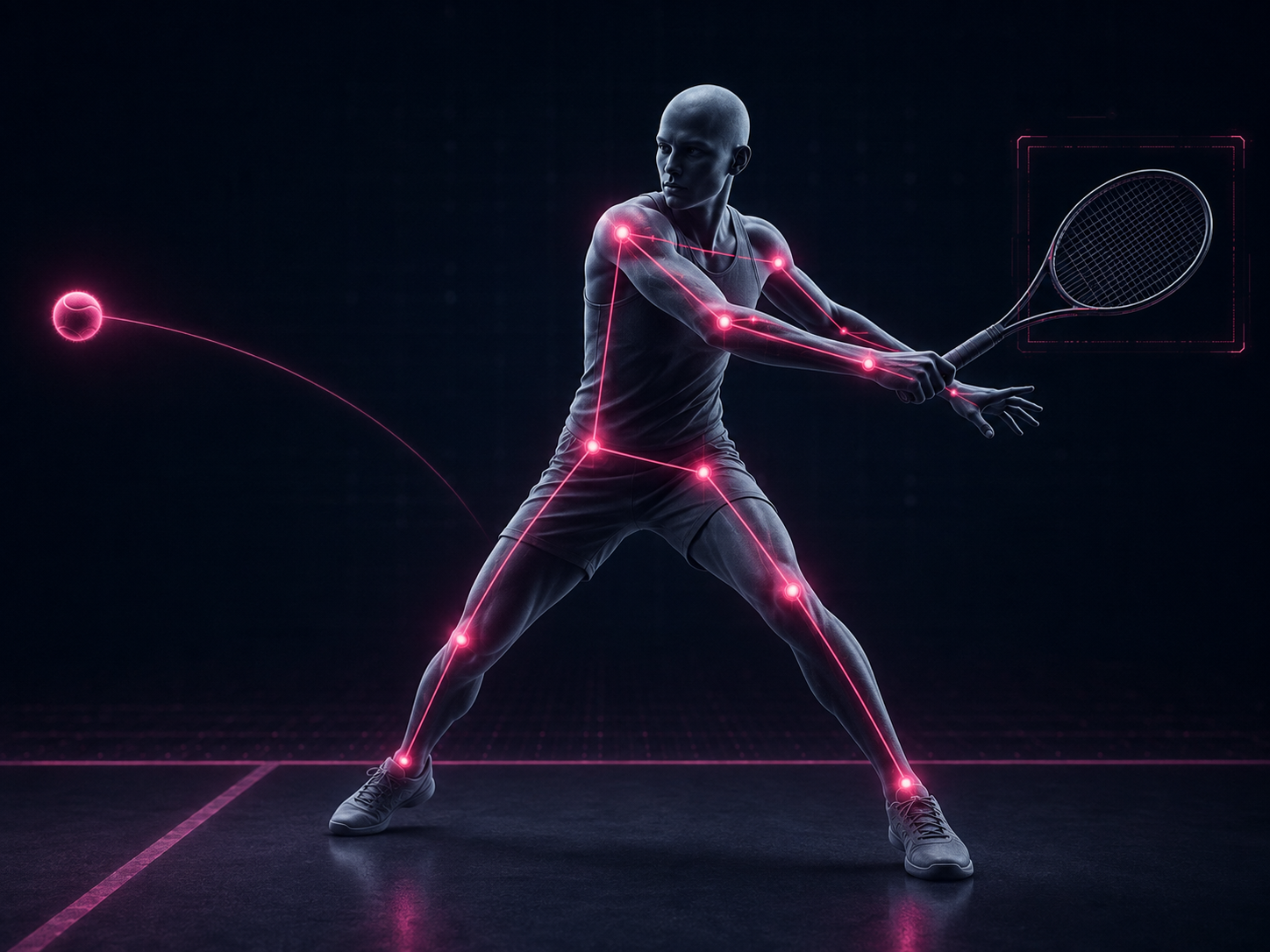
With high-speed cameras and motion-tracking systems, artificial intelligence systems can capture players’ moves and body angles. Computer vision helps interpret captured video and evaluate athletes' actions during games and training sessions. For instance, AI can analyze foot alignment or arm and wrist position.
The machine learning model processes this data to detect and analyze technical flaws and inefficiencies that the human eye can easily miss. Knowing how joint movement and body balance work, players can achieve better force distribution and improve posture. Biomechanical analysis enables more efficient risk reduction and can signal when actions become unsafe for the player.
AI in coaching enables personalized training plans that target the weak areas of each player. For example, if the analysis reveals slow footwork, the system may suggest specific drills, keeping coaches informed about all possible areas for improvement. Systems can track ball speed and shot accuracy, providing this data to coaches’ dashboards to visualize tailored training. As a result, players can refine their skills and gain better control over each movement.
Strategic insights and match-outcome prediction
Artificial intelligence can analyze factors such as pitch conditions, players’ form, and team composition to simulate potential game scenarios. Simulating the matches, experts can more accurately predict possible outcomes. Empowered with strategic insights, coaches and team captains can make more informed decisions and go through pre-match training with higher effectiveness.
A valuable application of data science and AI in cricket is to discover hidden patterns that can help identify not only momentary weaknesses but also the strengths and weaknesses of opponents.

With predictive systems used during live games, coaches can provide data-driven adjustments to enhance players’ performance and achieve better results tailored to the current situation.
Judging accuracy and ball tracking
Artificial intelligence is a powerful tool to ensure fair play. For instance, it can improve decision accuracy by providing judges with real-time game evaluation and moment tracking. AI reduces human-factor errors and matches controversies, supporting every decision with data from the game. It enhances the trust of fans and players in fair refereeing, enabling them to focus on the game itself.
Fan engagement, broadcasting, and immersive experience
Artificial intelligence completely transforms fans' experiences by surrounding them with a wealth of informative insights and automated highlights. Real-time commentary enhances immersive experience, similar to solutions like augmented reality, removing the distance between the game and fans.
Artificial intelligence analyzes user preferences in depth and tailors recommendations according to their interests. This way, sports platforms can deliver the content desired by fans, such as matches featuring their favorite players or teams. Even commentaries can be tailored according to the user, focusing on preferred aspects of the game.
Injury prevention and player wellness
The health of athletes is one of the most crucial factors to consider during matches and training sessions. With the aid of artificial intelligence, coaches and players can achieve better results in this regard. For example, AI can monitor the entire training process and evaluate the workload. It can detect early signs of fatigue and prevent injuries.
Wearable technology and predictive dashboards provide comprehensive insight into the athlete's situation, helping to adjust training sessions according to their physical state. With an advanced technology-driven approach, athletes can prolong their careers and optimize recoveries.
Case Study: A Mobile App for an Australian Rugby Club

Challenges, Limitations, and Risks of Cricket AI
If you want to implement artificial intelligence into your cricket club workflows, you need to consider a bunch of challenges and limitations you may face in the process.
Data quality and bias risks
For instance, it is essential to remember that an AI model requires high-quality data for learning; the lack of information or poor-quality data can lead to biases in algorithms and reduce the model’s effectiveness.
High costs and resource inequality
Initial implementation is also quite costly. The price also depends on the choice of model: a pre-built one offers lower customization but is ready for use, while building from scratch is less affordable but more tailored to your specific needs.
Advanced analytics tools are quite expensive, and not all sports clubs have sufficient sponsorship to afford them for their training programs. Unfortunately, it extends the gap between smaller clubs and elite organizations.
Adoption challenges
Human-machine integration is not always an easy process, as team members must learn to operate with new technology and maximize its benefits. In our experience, it is essential to demonstrate artificial intelligence as a tool and a means to enhance the capabilities of human coaches, rather than replace them.
Ethical and transparency problems
The use of AI often raises ethical concerns regarding the fairness and transparency of talent scouting and AI decision-making. To handle this problem, you need to ensure that all AI’s decisions are made in a transparent and explainable way. It will help ensure that talent identification is accurate and that no individual is overlooked due to unintentional biases caused by favoring players from certain regions or backgrounds.
Also, as much as numbers help during scouting and training, game sense, teamwork, and the human ability to adapt are essential for winning.
Overreliance on AI
Artificial intelligence empowers sports with inhuman accuracy and real-time access to a great amount of analyzed information, but it is heavily limited to the data provided for training. It provides evidence-based feedback and reveals hidden patterns, offering a solid foundation for informed decision-making.

However, excessive trust may cause more harm than profit if the coaches start to ignore intuition and experience, relying only on numbers.
The Future Landscape: What’s Next for AI in Cricket
At Requestum, we believe that AI development will also enhance the use of advanced technologies in the sport of cricket. It will enhance fans' and players' experiences and raise the competition to a new level, where, in addition to physical state, the information supply will also play a significant role. We are taking a step closer to strategies that are fully based on the combination of human intuition about the game and data-driven insights provided by AI.
With generative AI capabilities, teams will be able to simulate possible game outcomes and adjust their strategies for better results. With generated matches, teams will be able to see realistic scenarios and get insightful analytical data. VR and AR training will bring conditions closer to real-life scenarios, enhancing their preparation and facilitating faster skill development. In virtual reality, players will be able to practice against AI-generated opponents.
Let’s discuss your idea and see how we can turn it into a solid product
Smart stadiums will become even more fan-oriented. For instance, nowadays, stadiums equipped with artificial intelligence technologies already offer a futuristic experience, applying IoT to optimize crowd management and enhance fan safety. AI-based systems can optimize traffic in parking areas and reduce waiting times.
We also believe that in the future, fan personalization will become even more in-depth, providing fans with more desired information and content, and increasing their engagement and involvement in the cricket club’s life.
If teams and organizations want to be prepared for the future and stay at the edge of the competition, we recommend considering investing in artificial intelligence to be fully equipped. Modern technologies will improve training routines and ensure safe and productive preparations before games. They will not only help develop personal skills but also assist coaches in developing winning strategies and exploring new approaches to scouting.
Conclusion
Artificial intelligence offers cricket clubs valuable insights, enabling them to monitor their performance, improve, and develop effective strategies. AI makes referrals more accurate by confirming them with real-time data.
Fan experience can become more personalized, increasing fans' involvement in the game and the club’s activities. However, as much as it improves the team's effectiveness and brings a pleasant impression to the fan base, AI is, first and foremost, a tool to enhance humans, not a means to replace them. Human judgment should always remain central.
Ready to implement AI for your cricket team? Requestum invites you for a consultation on how to make it work. Let’s discuss future cooperation and explore how AI can help your club achieve new victories.

Our team is dedicated to delivering high-quality services and achieving results that exceed clients' expectations. Let’s discuss how we can help your business succeed.


SHARE: